
Antistress Games: Calm&Relax
Happy Go GameArcade
4.3106.00 Reviews
- Version
- 1.4.9
- Installs
- 10.00M
- Age Rating
- Everyone
Screenshots



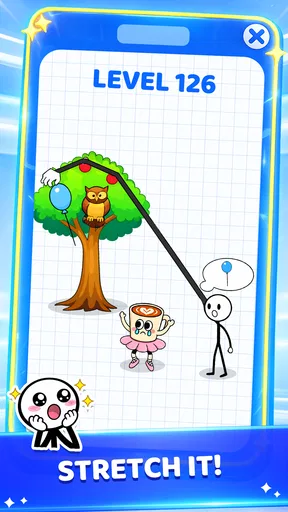




Our Review of Antistress Games: Calm&Relax
 Analysis by Appyee
I picked up Antistress Games: Calm&Relax expecting a quick collection of small arcade activities, and that is exactly where it makes the most sense. It is not a deep adventure, a competitive challenge, or a replacement for a full meditation program. Instead, it offers short, low-pressure interactions designed to give your attention somewhere gentle to go when you need a break.
That makes it especially interesting on a shared household device. One person can use it for a few quiet minutes, then hand the phone to someone else without asking them to learn a complicated system or follow a long story. The game is free to download, rated for Everyone, and comes from Happy Go Game. After spending time with it, I see its strongest appeal in simple, repeatable relaxation rather than long-term progression.
How it fits into a shared household routine
A realistic use case is the period after dinner when everyone is still in the same room but nobody wants a demanding game. One person may want to unwind, another may be waiting for a call, and a child may be looking for something more tactile than a video. Antistress Games: Calm&Relax can fill that gap because its arcade format is easy to approach in short sessions.
I would not treat it as a family game in the traditional sense. There is no reason to expect meaningful cooperation, shared objectives, or a structured turn-taking mode. Its value in a household comes from being easy to pass around, not from making several people play together. Each user can have a brief turn with the activities that feel most satisfying to them.
That distinction matters. If you want a game that creates conversation around a table, a puzzle title with shared decisions will probably work better. Here, the experience is more personal. Even when the phone is physically shared, the relaxation is individual: one person taps, swipes, or explores for a while, and the next person starts their own quiet moment.
The store summary presents it as an offline sanctuary built around ASMR-style calm, and I found that idea more useful when understood as a mood rather than a promise of clinical relaxation. The game can help interrupt a restless moment, but it cannot solve stress by itself. I like it as a small reset button, especially when I do not want to commit to a film, a social feed, or a demanding game.
What makes the short-session design useful
The biggest practical strength is the low commitment. I can open it while waiting for food, during a short break, or before putting the phone down for the evening. There is no need to remember a complicated plot or rebuild a strategy after several days away. That makes it friendlier for occasional users than arcade games built around difficult scores and constant improvement.
There is also a useful psychological trade-off here. A traditional arcade game gives me a clear target, but that target can create pressure. This collection is better when I want the movement and feedback of a game without feeling that I am failing. If I start chasing perfect performance, I am using it against its main purpose.
For shared use, I would keep the phone on a stable surface rather than passing it constantly during a busy moment. Small sensory games can encourage repeated tapping, and a calm session becomes less calm if several people are reaching for the device at once. A simple rotation works better: one person uses it for a few minutes, then leaves it ready for the next person.
Setting expectations before anyone else uses it
Because the game is free, it is easy to install casually and let another household member try it. The important boundary is not technical; it is conversational. I would explain that the app includes optional in-app purchases priced from $0.99 to $1.99 per item, so the device owner should decide in advance whether purchases are allowed.
This is particularly important on a shared phone or tablet. A free download does not automatically mean every part of the experience is free. Before handing the device to a child or guest, I would check the purchasing arrangement already used on that device and make the rule clear. That avoids turning a relaxing game into an argument about an unexpected charge.
I would also set a simple time boundary for younger users. The Everyone rating makes the game broadly approachable, but an age label does not tell me how long a child should use a screen or whether the content suits that particular child. A short, supervised session is a more sensible starting point than leaving the device available indefinitely.
For adults sharing one device, the boundary is different. The main concern is privacy and personal space rather than age. I would avoid assuming that every person wants their activity treated as a group experience. If the device is used by several people, each person should be free to stop without being pushed to continue or explain why a certain activity is calming for them.
Coordinating turns without making relaxation feel like a task
Coordination works best when it stays informal. I would not create a strict schedule unless several people genuinely want one. A simple agreement such as “use it for a little while, then leave it on the main screen” is enough for most homes. The point is to reduce friction, not add another household rule.
One practical habit is to let each user choose their own starting point instead of recommending a single “best” activity. People respond differently to repetitive motion, visual feedback, and sound. What feels soothing to one person may feel distracting to another. Giving users permission to explore briefly is more useful than insisting that everyone follow the same path.
Another useful approach is to separate shared access from shared preferences. I would not assume that the previous user’s choice should become the next person’s choice. If the game opens where somebody left off, the next user may need a moment to orient themselves. On a common device, returning to a neutral screen after a session can make handoffs smoother, provided the app’s navigation allows it naturally.
This is also where the game compares favorably with competitive arcade alternatives. A score-based title can create an obvious hierarchy between household members, which may be fun for some groups but annoying for others. Antistress Games: Calm&Relax is less likely to turn a short break into a contest. The trade-off is that it gives people fewer reasons to keep discussing the experience together.
Age, trust, and the limits of a calm label
The Everyone rating makes this an approachable choice for a broad audience, but I would still match the experience to the person using it. Younger children may enjoy the immediate interaction, while older users may prefer it as a quiet distraction. The same game can serve both groups, yet the surrounding expectations should not be identical.
For a child, I would focus on access and spending boundaries. The child does not need to understand every detail of the app to enjoy it, but the adult managing the device should understand that optional purchases exist. I would also watch for whether the child is using it calmly or simply repeating actions because the screen is available. A relaxing design does not remove the need for ordinary screen-time judgment.
For an older child or teenager, the conversation can be more collaborative. Instead of presenting the app as a reward or a solution to every difficult feeling, I would describe it as one low-pressure way to take a pause. That framing avoids giving a casual game more emotional responsibility than it can carry.
Adults may appreciate the lack of competitive pressure, but not everyone will find the collection relaxing. Some people prefer silence, breathing exercises, music, or a walk. Others become more alert when interacting with a screen. In those cases, a dedicated meditation app, an audio player, or simply stepping away from the phone may be a better alternative.
I also would not choose it for somebody looking for a substantial arcade challenge. The category label is accurate, but the calming purpose changes how I judge success. If your ideal session involves mastering levels, improving a leaderboard position, or unlocking a long chain of goals, a conventional arcade game will probably offer more lasting motivation.
What I noticed after using it repeatedly
The first non-obvious lesson is that the best time to use it is before frustration peaks. When I wait until I am already overstimulated, even a gentle game can feel like one more demand on my attention. Used earlier, it works better as a transition between activities: after work, before sleep, or while taking a short pause from household noise.
The second is that variety matters more than duration. I get more from changing activities when one interaction stops feeling soothing than from forcing myself to stay with it. This is one reason the collection format is more practical than a single repetitive toy. It gives me a chance to adjust the kind of interaction instead of abandoning the app immediately.
The third is that sound and physical context can change the experience. In a quiet room, the app may feel more immersive; in a busy household, the same session can become visually calming but not genuinely peaceful. Headphones may help some users, but I would be careful around children and shared spaces. The app should complement the environment, not become another source of isolation or noise.
A fourth trade-off is the absence of pressure. That is a strength when I want to decompress, but it can also make the game feel directionless. Without a strong reason to return, I may use it only when I remember it. Users who need goals to maintain interest should see it as a break-time tool rather than a main game.
Performance, access, and everyday practicality
The game supports devices running Android 7.0 or later, which gives it a broad place among older Android phones and tablets. That is helpful for households that keep a spare device for casual use. I would still judge the experience on the particular device rather than assuming that an older operating system guarantees identical smoothness everywhere.
The current version is 1.4.9, so I would keep the app updated through the normal device process when possible. Updates can matter on a shared device because several people may rely on the same installation, and an outdated version can create avoidable confusion. I would also check that there is enough storage and that the device is charged before using it as a communal relaxation screen.
Its free entry point is a clear advantage for trying it without a financial commitment. The optional item purchases are the main point that deserves adult attention in a family setting. I would not describe the game as completely cost-free simply because installation costs nothing; the more accurate view is that you can begin without paying, while some extras may involve small purchases.
The offline-focused positioning is useful for moments when connectivity is inconvenient, such as travel or a room with unreliable service. I would still avoid making assumptions about every part of the app’s behavior outside a connection. For a planned trip, I would open it beforehand and make sure the content I want to use is available in the way I expect. That small check is more reliable than discovering limitations after leaving home.
How it compares with familiar alternatives
Compared with a standard arcade title, this game is gentler and less achievement-driven. You lose some of the excitement that comes from escalating difficulty, but you also avoid the pressure of constant performance. It is a better fit for a tired adult or a child who wants simple interaction without a competitive target.
Compared with a meditation app, it is more playful and less structured. Meditation apps usually guide attention through sessions, timers, or spoken instruction. This game gives me more control and less commitment, but it does not replace a carefully designed mindfulness routine. If you want guidance, breathing practice, or a repeatable sleep program, choose the specialized tool.
Compared with sensory videos or ambient audio, it asks for active participation. That can be useful when passive content fails to hold my attention, but it also means the phone remains central to the break. Someone trying to reduce screen use may be better served by audio, stretching, drawing, or a non-digital tactile activity.
Compared with a puzzle collection, it offers less intellectual friction. That is exactly why it can work after a tiring day, but it also means it may not satisfy users who want a sense of discovery or problem-solving. I would choose the puzzle alternative when I want my mind engaged, and this one when I want my hands occupied without much mental effort.
Who should install it and who should pass
I would recommend it to someone who wants a free, approachable arcade collection for short breaks, especially if competitive games make them feel more tense. It is also suitable for a household that wants one simple app several people can try, provided the device owner manages purchase expectations and does not confuse a shared device with a shared account experience.
It is a good candidate for an older spare Android device because the minimum operating system is not demanding by modern standards. It can also suit travelers who want something more interactive than background audio, as long as they test their preferred activities before relying on it away from home.
I would skip it if you need a deep progression system, multiplayer coordination, detailed accessibility controls, or a guided mental-health routine. I would also skip it if screen interaction itself is the thing you are trying to escape. In those situations, the usual alternatives are not merely different; they are better matched to the goal.
The rating of 4.3 from around 32 thousand ratings suggests that many users find the concept worthwhile, while the smaller number of written reviews means I would still rely on my own trial rather than treating the score as a complete description. I see the rating as a useful sign of broad appeal, not proof that every activity will suit every person.
My household verdict
After using Antistress Games: Calm&Relax, I see it as a modest but practical comfort app disguised as an arcade game. Happy Go Game has chosen a format that is easy to understand, easy to share physically, and useful in short bursts. Its strongest quality is not depth; it is the low effort required to begin.
For a household, I would install it with three simple expectations: each person chooses their own way to use it, adults keep an eye on the optional purchases, and nobody treats the Everyone rating as a substitute for supervision. Those boundaries preserve the relaxed character without inventing rules the game does not need.
With more than ten million installs, it has clearly reached a large audience, but popularity is not the reason I would recommend it. I would recommend it because it occupies a specific middle ground between a demanding arcade game and a passive relaxation tool. It gives restless hands something gentle to do while leaving the session open-ended.
My final view is positive but measured. The free download makes it easy to test, the age rating keeps the audience broad, and the current release gives Android users a straightforward way to try the collection. Just remember what it is: a short, interactive pause rather than a complete answer to stress. For shared household use, that modest role is also its biggest advantage.
Verdict
Strengths of Antistress Games: Calm&Relax
- Wide variety of simple games for quick stress-relief sessions.
- Calming visuals and sounds create a soothing atmosphere.
- Easy controls make it accessible for all ages.
- Useful for short breaks, travel, or winding down before bed.
- Most activities can be played without advanced gaming skills.
Limitations of Antistress Games: Calm&Relax
- Some games may feel repetitive after extended use.
- Certain content or features may require in-app purchases.
- Ads can interrupt the relaxing flow in the free version.
- Relaxation effects vary depending on personal preferences.
- May use extra battery during longer play sessions.
Other Releases by Happy Go Game
View All
Magic Piano:EDM Music game
Music3.9

Subway Runner: Parkour Game
Arcade4.0
Similar Picks in This Category
View All
Subway Surfers
SYBO Games4.6

Stickman Party 234 MiniGames
PlayMax Game Studio4.6

Subway Princess Runner
Ivy4.4

Temple Run
Imangi Studios4.2

Zombie Tsunami
Mobigame SAS4.6

Stack Ball - Crash Platforms
CASUAL AZUR GAMES4.5
Frequently Asked Questions
What is Antistress Games: Calm&Relax?
Antistress Games: Calm&Relax is a casual relaxation app designed to help users take short mental breaks through simple, satisfying activities. It typically combines calming mini-games, tactile interactions, and soothing visual or audio elements that can be enjoyed without learning complicated rules. The experience is aimed at people who want a quick way to unwind, reduce boredom, or relax during a busy day.
Does Antistress Games: Calm&Relax work without an internet connection?
Many of the app’s basic relaxation activities can generally be used offline after installation, which makes it convenient for travel, commuting, or moments when Wi-Fi is unavailable. However, some features may depend on an internet connection, including advertisements, analytics, updates, optional online content, or purchases. Availability can also vary between Android and iOS versions, so checking the store description is recommended before downloading.
Is Antistress Games: Calm&Relax free to download and use?
The app can usually be downloaded without an upfront charge, but free access may include advertising, optional purchases, or limitations on certain activities and features. The exact payment model can change with updates and may differ by platform or region. Before starting, review the app-store listing and in-app purchase information carefully, especially if children may use the device.
Is Antistress Games: Calm&Relax suitable for children?
The simple controls and non-competitive activities may make Antistress Games: Calm&Relax appealing to children, teenagers, and adults. Nevertheless, parents should check the age rating, advertising content, privacy details, and available in-app purchases before allowing independent use. The app should be viewed as casual entertainment and a relaxation aid, not as professional medical treatment for anxiety, stress, sleep problems, or other health conditions.
What features should I expect when using Antistress Games: Calm&Relax?
After opening the app, users can expect a collection of quick, easy-to-understand activities focused more on calming interaction than on winning or progressing through a demanding campaign. Depending on the installed version, features may include relaxing sounds, tactile mini-games, visual effects, vibration, and different scenarios or objects to interact with. Device performance, permissions, advertisements, and premium content may affect the overall experience.
Play our best games!


